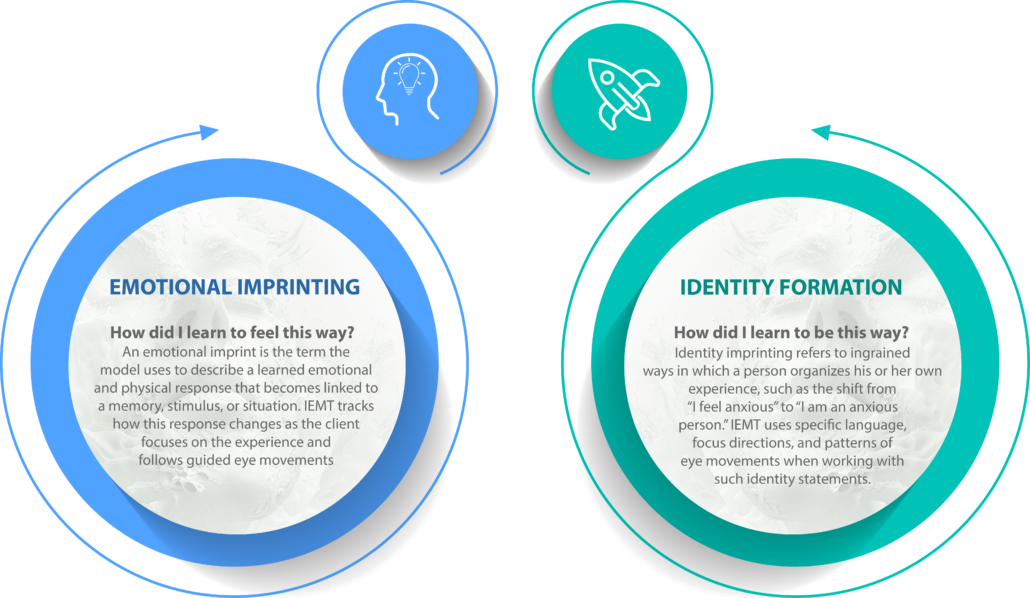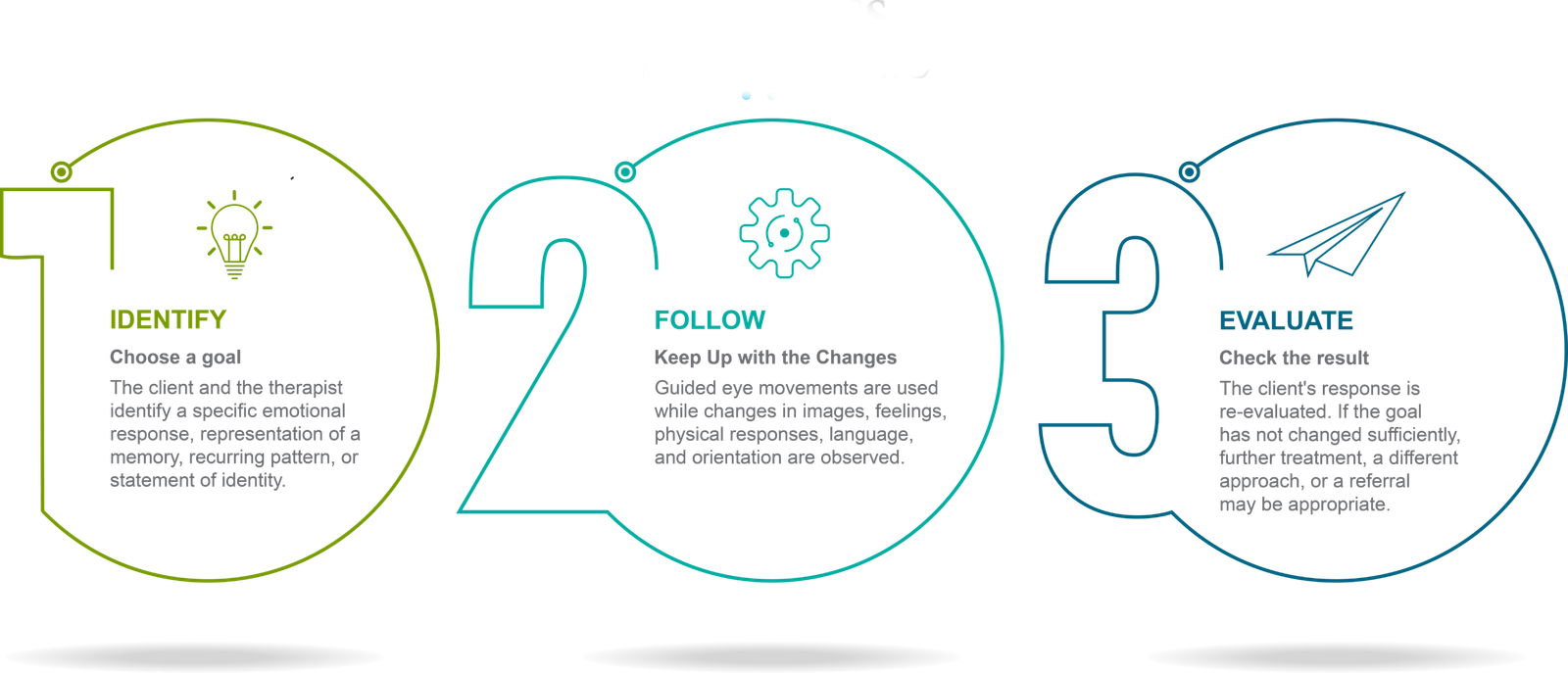

The Integral Eye Movement Technique (IEMT) was developed by Andrew T. Austin on the basis of observations made during change work involving eye movements. The model focuses on the way in which certain emotional responses and ways in which a person experiences themselves can be learnt, repeated and maintained.
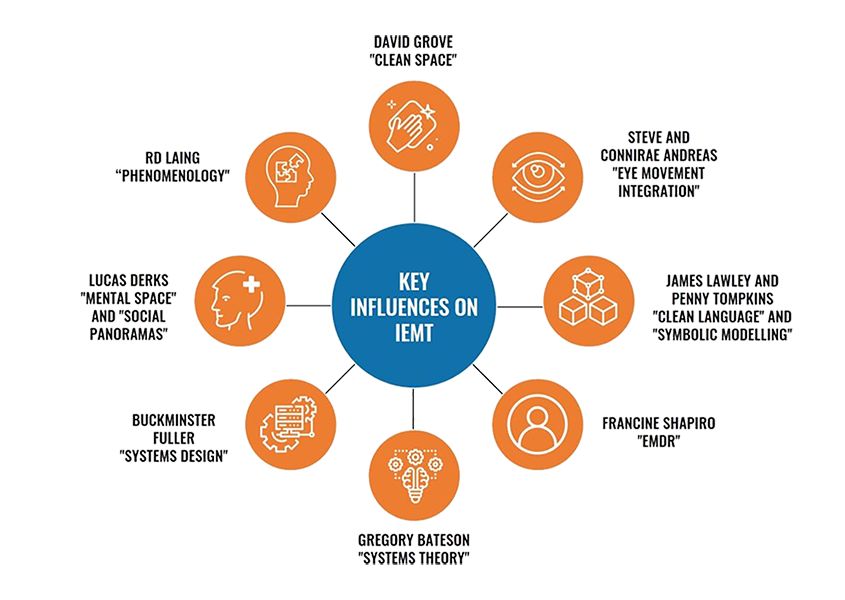
The origins of this model can be traced back to Steve Andreas and Connirae Andreas’s Eye Movement Integration Therapy and Francine Shapiro’s Eye Movement Desensitisation and Reprocessing (EMDR) – developed by Francine Shapiro. The model was also influenced by David Grove’s ideas on exploring identity through the use of pronouns. The model was developed by therapist Andrew T. Austin in the United Kingdom.
This development followed observations of a number of neurological phenomena that occur during therapeutic eye movements, particularly at the moment when the emotional coding of a problematic image changed.
This led to the development of a range of applications for these phenomena, enabling the Integral Eye Movement Technique to be applied to neurological imprints, in particular to emotional imprints and certain identity imprints.
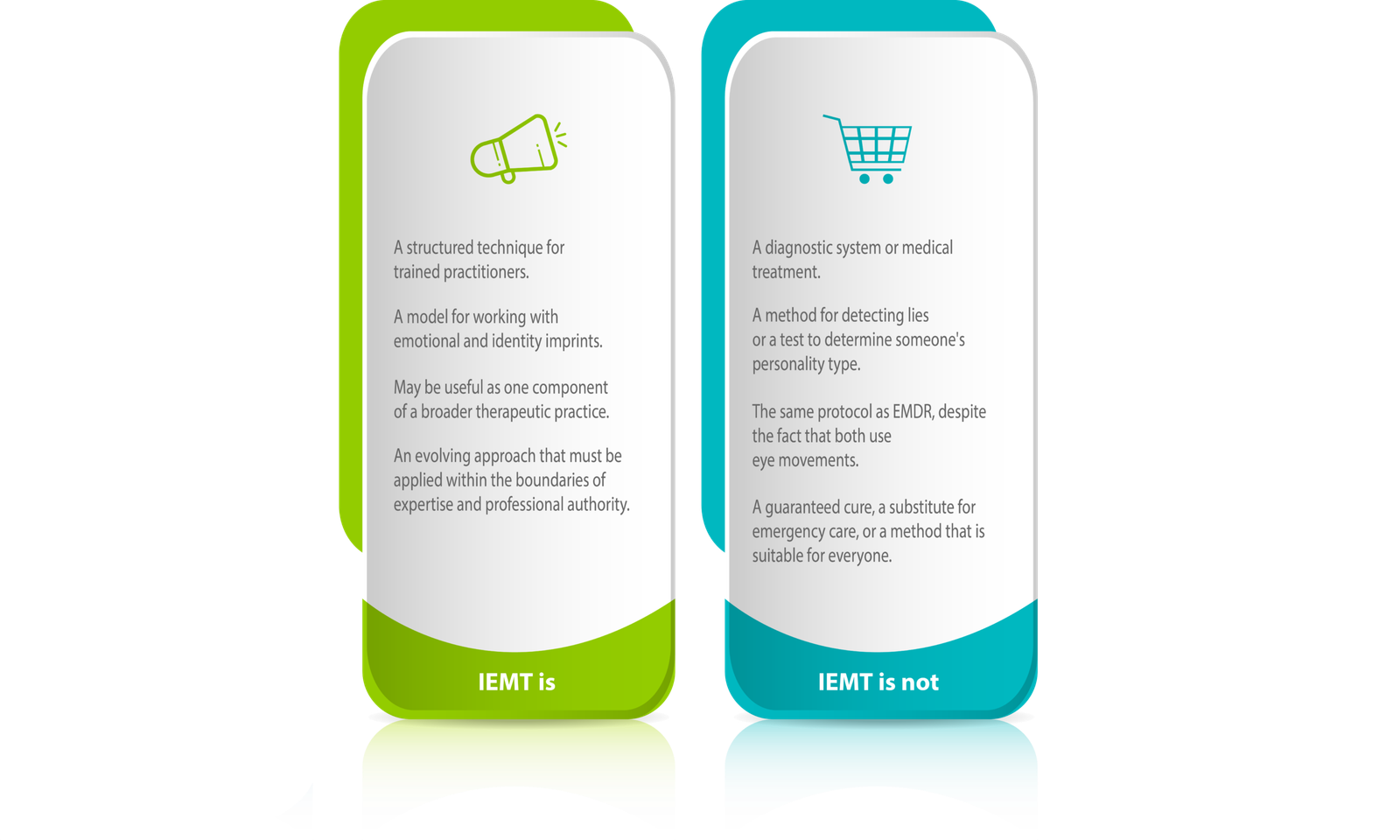
The current name is Integral Eye Movement Technique. In older courses, publications and web pages, the former name Integral Eye Movement Therapy may be used. The technique remains a therapeutic approach; the name change makes it clear that IEMT is a technique used within the broader category of therapy and change work.