Integral Eye Movement Technique was developed by Andrew T. Austin from observations made during eye-movement-based change work. The model focuses on how particular emotional responses and ways of experiencing the self may become learned, repeated and maintained.
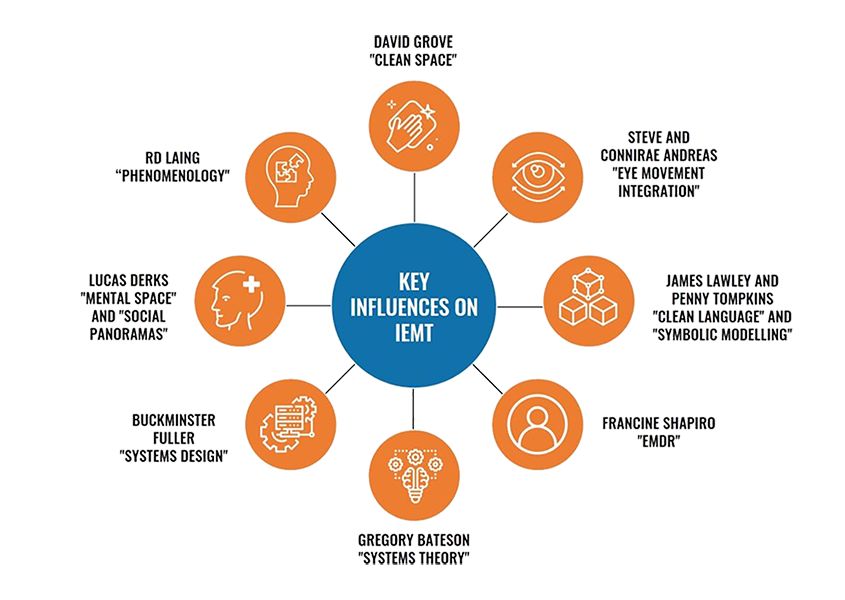
The roots of this model could be traced to Steve Andreas and Connirae Andreas’s eye-movement integration therapy and Francine Shapiro’s eye movement desensitization and reprocessing (EMDR) therapy, and was also influenced by David Grove’s ideas about exploring identity through the use of pronouns. The model was developed by therapist Andrew T. Austin, in the United Kingdom.
This development followed observations of a number of neurological phenomena that occur during therapeutic eye movements, specifically at the moment that problematic imagery changed its emotional coding.
This led to the development of a set of applications of these phenomena that enabled Integral Eye Movement Technique to be applied to neurological imprints, specifically imprints of emotion and some imprints of identity.
The current name is Integral Eye Movement Technique. Older courses, publications and webpages may use the former name, Integral Eye Movement Therapy. The technique remains a therapeutic practice; the name change clarifies that IEMT is a technique used within the wider category of therapy and change work.
Core areas of IEMT
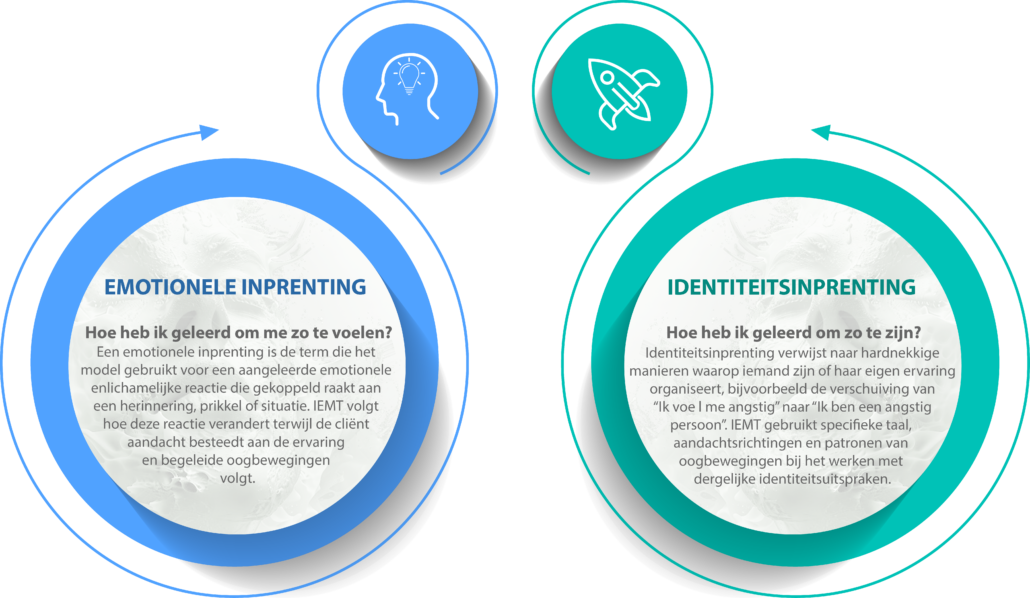
The two IEMT distinguishes between learned emotional responses and learned patterns of identity. They often interact, but they are not treated as the same problem.
| EMOTIONAL IMPRINTING | IDENTITY IMPRINTING |
| How did I learn to feel this way? | How did I learn to be this way? |
| An emotional imprint is the model’s term for a learned emotional and bodily response that becomes linked to a memory, cue or situation. IEMT tracks how that response changes while the client attends to the experience and follows guided eye movements. | Identity imprinting refers to persistent ways of organising self-experience, for example the shift from “I feel anxious” to “I am an anxious person”. IEMT uses distinct language, attention and eye-movement patterns when working with these identity statements. |
What happens in an IEMT session?
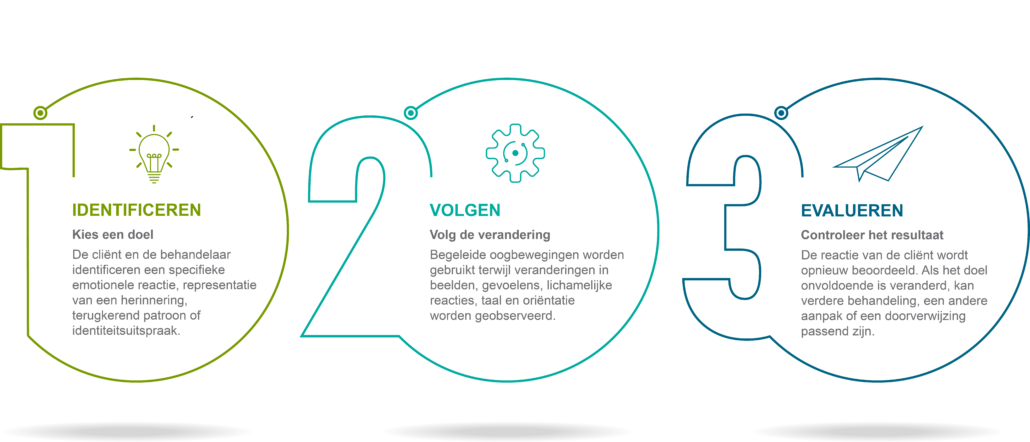
A practitioner uses observation, questions and structured eye-movement patterns to track changes in the client’s internal experience. The exact sequence depends on the person, the presenting issue, consent, suitability and the practitioner’s scope of competence.
| 1. IDENTIFY | 2. TRACK | 3. REVIEW |
| Select a target | Follow change | Check the result |
| The client and practitioner identify a specific emotional response, memory representation, recurring pattern or identity statement. | Guided eye movements are used while changes in imagery, feeling, body response, language and orientation are observed. | The client’s response is reassessed. Further work, a different approach or referral may be appropriate if the target has not changed sufficiently. |
Eye movements in IEMT are not ‘eye accessing cues’
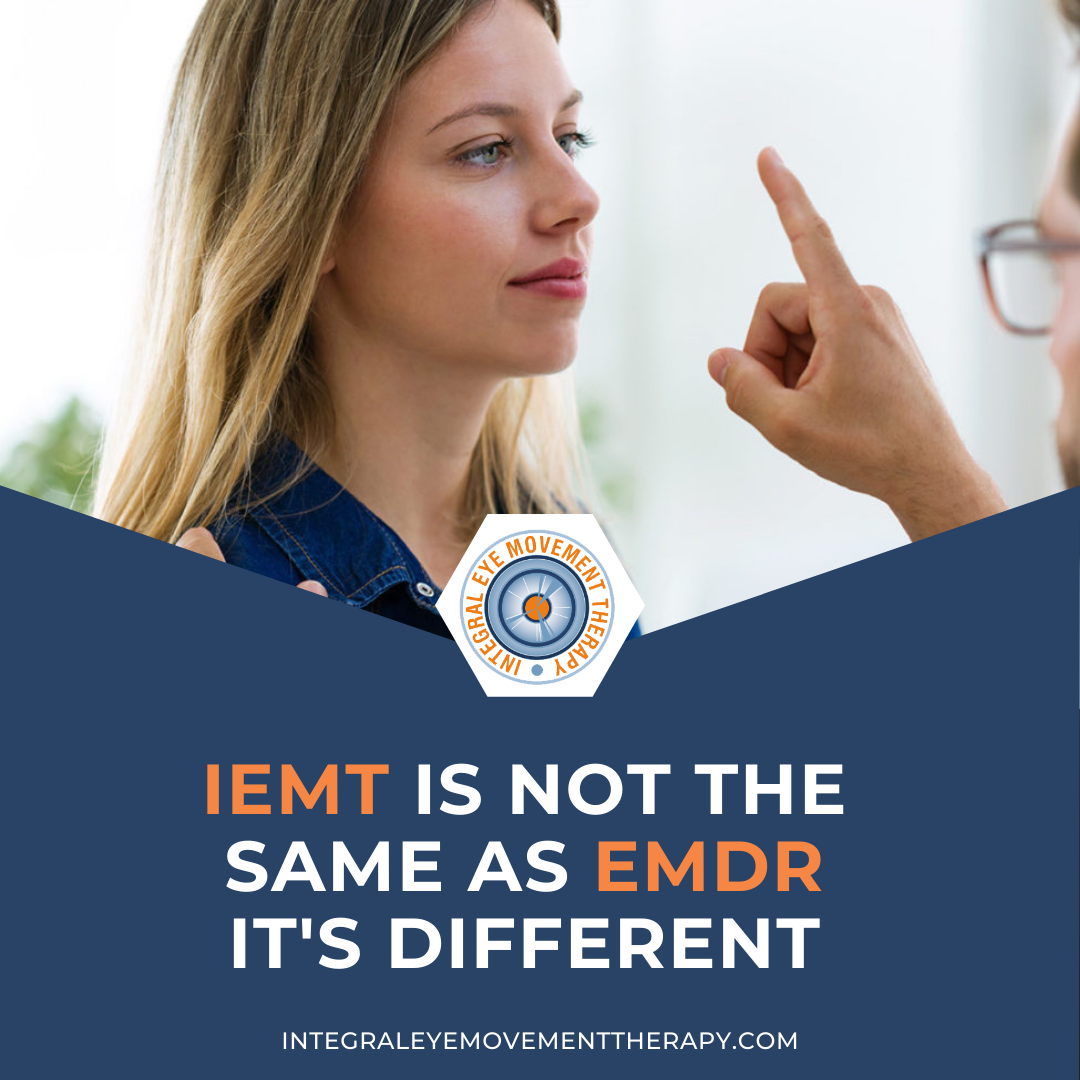
IEMT does not use eye direction to decide whether someone is lying or to classify them as a “visual”, “auditory” or “kinaesthetic” person. Those familiar claims are not the basis of the technique. In IEMT, the practitioner deliberately guides eye movements as part of a structured therapeutic process.
| What IEMT is, and what it is not | |
| IEMT is | IEMT is not |
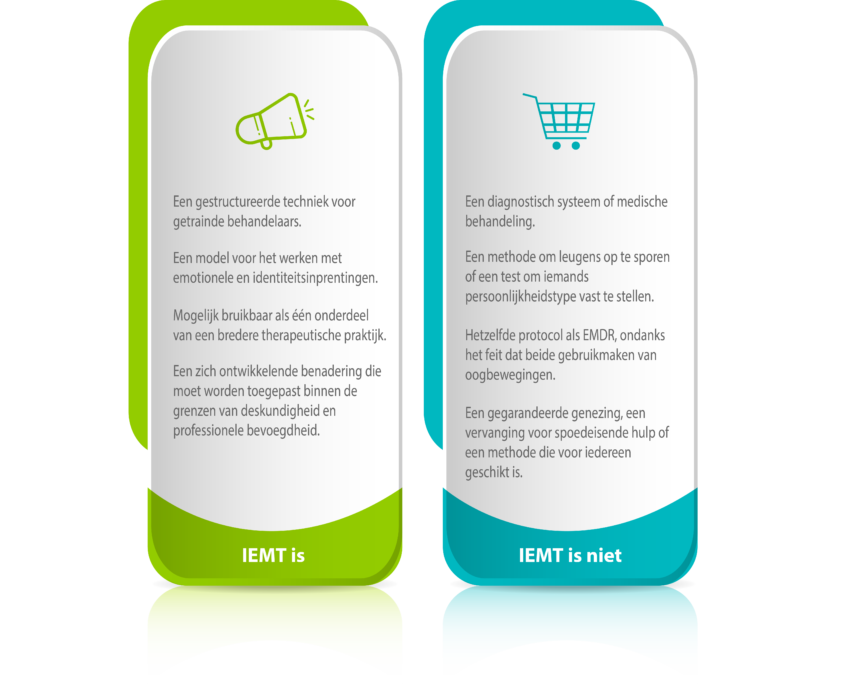
| A structured technique for trained practitioners. | A diagnostic system or medical treatment. |
| A model for working with emotional and identity imprints. | A lie-detection method or a test of personality type. |
| Potentially useful as one component of wider therapeutic practice. | The same protocol as EMDR, despite both using eye movements. |
| An evolving approach that should be used within competence and scope. | A guaranteed cure, a replacement for emergency care or suitable for every person. |